From the moment a steel material comes into contact with the galvanizing kettle, it begins to react with the zinc. This reaction takes approximately 2–3 minutes. During this time, an alloy layer forms on the steel surface as a result of the reaction between the steel and the zinc. This is exactly what distinguishes HDG from all other coating methods. The resulting coating is on the micron scale.
The coating thickness that forms on the material varies depending mainly on its chemical composition, its exact thickness and mass, surface roughness, the temperature of the galvanizing kettle, and the time the material stays in the kettle.
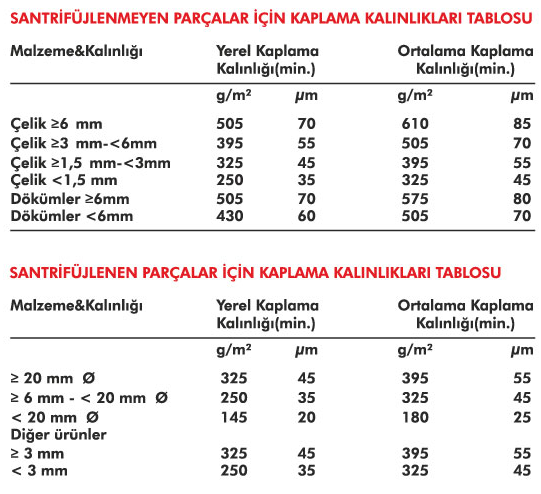
Coating thickness and corrosion performance are directly proportional. However, when the coating thickness exceeds certain values, coating adhesion weakens and the risk of coating flaking arises. Across all standards worldwide, coating thickness is evaluated according to the cross-sectional thickness of the material.
The coating thickness reference table is given in the standard "TS 914 EN ISO 1461 Hot-Dip Galvanized Coatings on Fabricated Iron and Steel Articles – Specifications and Test Methods".